
Smart Ring vs. Smart Watch vs. Smart Band: Which Wearable Fits You Best
- Tech
- By Marcus T. on
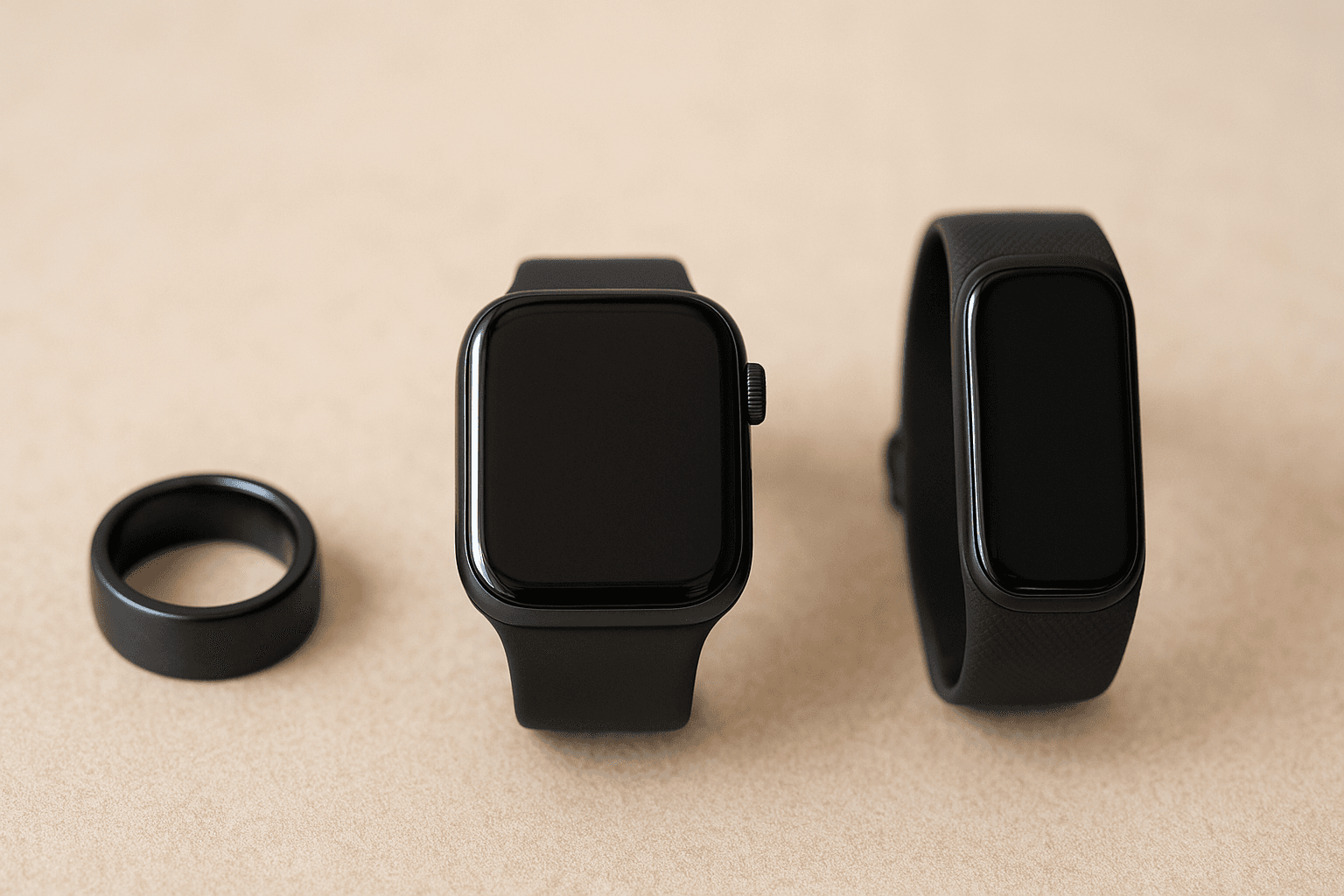
Wearables now come in three main shapes: the ring, the watch, and the band. All three can count steps, estimate sleep, and monitor heart rate. The differences show up in what each one is like to wear every day, how often it needs charging, and how much it costs.
Picking the wrong type is a common reason people stop wearing a device after a few weeks. A bulky watch can feel annoying in bed, while a screenless ring may frustrate someone who wants notifications. Matching the device to daily habits matters more than chasing the longest spec list.
The sections below compare the three categories on comfort, battery life, features, and price. Exact numbers vary by brand and model, so the figures here are typical ranges rather than guarantees. Checking current specs before buying is always worthwhile.
Comfort and Everyday Wear
Smart rings are the most discreet option. They have no screen, so they look like jewelry, and many people find them easy to forget about, including during sleep. Sizing matters, though, and fingers can swell with heat, exercise, or time of day. Many brands offer sizing kits to try before buying.
Smart watches are the bulkiest. Larger cases and thicker bodies can be uncomfortable overnight or while typing at a desk. Straps in different materials help, but the watch is still the most noticeable of the three.
Smart bands sit in the middle. They are usually slimmer and lighter than a full smartwatch, with a small screen or none at all. Many are designed to be worn around the clock.
Battery Life
Battery life often decides whether a wearable stays on your body or sits in a drawer. Charging gaps are a real part of the experience, especially for sleep tracking, since a device on the charger overnight cannot record sleep.
- Smart rings: Typically several days to about a week per charge, depending on the model and features in use.
- Smart watches: Often about one to two days for full-featured models, with some sport-focused or power-saving models lasting longer.
- Smart bands: Frequently a week or more, and some simple models go longer, thanks to small screens and fewer features.
Heavy use of GPS, always-on displays, and cellular connectivity shortens battery life on any device. Manufacturers' stated numbers usually reflect lighter use.
Features and What They Are Good For
Smart watches offer the widest range of features. Depending on the model, they may include notifications, calls, music controls, contactless payments, maps, built-in GPS, and a wide range of workout modes. Some include health tools such as ECG or blood oxygen readings, though availability varies by model and region.
Smart rings focus on passive tracking. They tend to emphasize sleep, readiness or recovery scores, heart rate, and temperature trends. They typically do not show notifications or let you start a workout from your wrist. Some brands also require a paid membership to see all of their data, so it helps to read the fine print.
Smart bands cover the basics: steps, heart rate, sleep, and often a handful of workout modes. Many offer basic notifications on a small display. Higher-end bands may add GPS or additional sensors.
A quick way to decide:
- Want notifications, apps, and detailed workouts? A smart watch is likely the best fit.
- Mostly interested in sleep and recovery without a screen? A smart ring is worth a look.
- Want simple tracking with long battery life at a low price? A smart band is usually enough.
None of these devices is a medical device by default. Health readings from consumer wearables are estimates, and anyone with a health concern should talk to a clinician rather than rely on a device alone.
Price Comparison
Prices change often and sales are common, but the categories tend to fall into rough tiers.
- Smart bands: Typically the most affordable, often ranging from about $30 to $150.
- Smart watches: The widest range, from roughly $150 for entry-level models to $800 or more for premium or rugged versions.
- Smart rings: Often in the $200 to $400 range up front, with some brands adding a monthly or annual subscription.
It is also worth considering long-term costs. Replacement bands, chargers, and subscriptions can add up, and rings can be harder to repair or resize than a watch with a swappable strap.
Which One Should You Choose?
Choose a smart watch if the wearable needs to act as an extension of your phone, or if detailed workout tracking and navigation matter. Accept that it will probably need charging every day or two.
Choose a smart ring if comfort and sleep tracking come first, and a screen is not necessary. Check sizing, subscription terms, and compatibility with your phone before buying.
Choose a smart band if simplicity, battery life, and budget are the priorities. It is also a reasonable starting point for anyone unsure whether they will stick with a wearable at all.
Whichever type fits, look for a generous return policy. A week or two of real-world use usually reveals more than any spec sheet.