
Winter Car Prep Checklist: What Every Driver Should Do Before the First Freeze
- Automotive
- By Barbara L. on
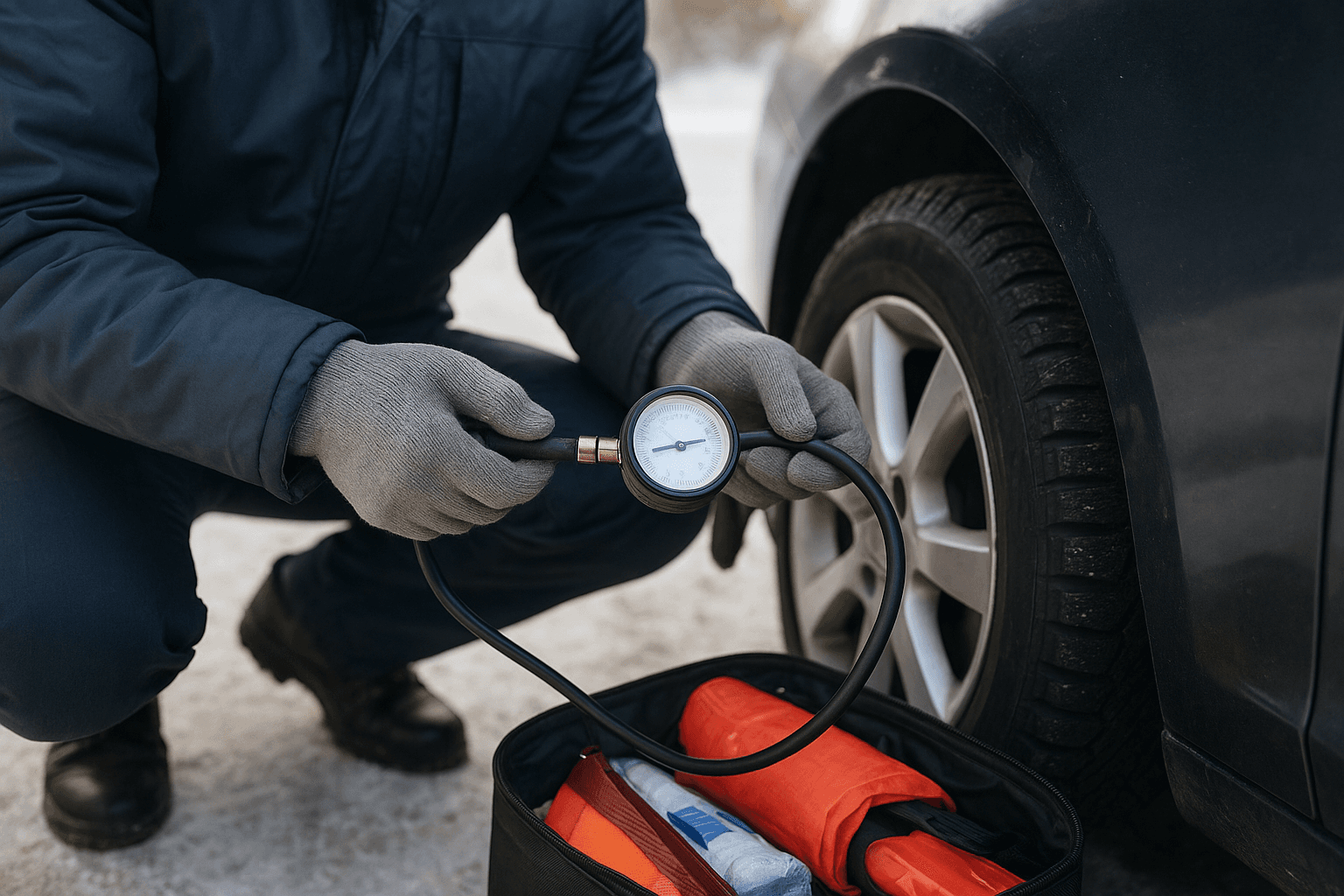
The first hard freeze tends to arrive before most drivers are ready for it. Tire pressure warnings pop up, windshields fog and frost over, and weak batteries that limped through the fall give out on a cold morning.
A little preparation goes a long way. Most of the items below take minutes, need no special tools, and can prevent a breakdown or a close call on icy pavement.
This checklist is organized in the order most drivers can tackle it: tires first, then visibility, then the battery and fluids, and finally the emergency kit. Work through it on a dry weekend before temperatures settle below freezing.
Step 1: Check Tire Pressure and Tread
Cold air shrinks the air inside tires. As a rule of thumb, pressure drops roughly 1 psi for every 10°F decline in temperature, so a tire that looked fine in September can be noticeably low by December.
- Check pressure when the tires are cold, meaning the car has sat for a few hours or been driven only a short distance.
- Use the recommended pressure on the sticker inside the driver's door jamb or in the owner's manual, not the maximum number printed on the tire sidewall.
- Do not forget the spare, if the vehicle has one.
- Recheck every few weeks, since temperatures can swing quickly.
Tread matters as much as pressure. The classic penny test works: insert a penny with Lincoln's head down into a tread groove. If the top of his head is fully visible, the tread is at or below 2/32 inch, the legal minimum in most states, and the tire needs replacing. For snow and slush, many tire professionals suggest replacing tires well before that point.
Drivers in areas with regular snow should also consider dedicated winter tires. All-season tires lose grip as rubber stiffens in the cold, while winter compounds are designed to stay flexible.
Step 2: Restore Visibility
Winter driving means less daylight, more glare, and more grime on the glass. Good visibility is one of the cheapest safety upgrades available.
- Wiper blades: Replace them if they streak, chatter, or show cracked rubber. Blades commonly last about six months to a year. Winter-style blades have a protective shell that resists ice buildup.
- Washer fluid: Fill the reservoir with a fluid rated for freezing temperatures. Plain water or summer blends can freeze in the lines.
- Lights: Have someone confirm that headlights, brake lights, turn signals, and fog lights all work. Clean or restore foggy headlight lenses.
- Glass: Clean the inside of the windshield, where film builds up and worsens glare and fogging.
- Defroster: Test the front and rear defrosters and the heater now, not on the first icy morning.
Keep a sturdy ice scraper and a soft brush in the car. Clear snow from the roof, hood, and all windows and lights before driving, not just a small peephole in the windshield.
Step 3: Test the Battery and Check Fluids
Cold weather reduces a battery's output while making the engine harder to turn over. Car batteries typically last around three to five years, so an older battery deserves a test. Many auto parts stores and repair shops will check it for free or at low cost.
Look for corrosion on the terminals and make sure the cables are snug. Slow cranking, dimming lights at idle, or a battery warning light are all signs of trouble.
Then review the basics:
- Coolant: Antifreeze is typically mixed with water at about 50/50, but check the owner's manual. A shop can test the freeze protection.
- Oil: Use the viscosity grade the manufacturer recommends, and change the oil if it is due.
- Brakes: Have them inspected if the car squeals, pulls to one side, or feels soft underfoot.
- Fuel: Try to keep the tank at least half full. It reduces the chance of fuel line freeze-up and leaves a cushion if traffic stalls.
Step 4: Build an Emergency Kit
Even well-maintained cars get stranded, and winter delays can last hours. Federal and weather-agency guidance consistently recommends keeping basic supplies in the vehicle.
- Jumper cables or a portable jump starter
- Flashlight with spare batteries, or a hand-crank model
- Warm blankets, gloves, hats, and extra socks
- Ice scraper, snow brush, and a small collapsible shovel
- Sand, salt, or non-clumping cat litter for traction
- Reflective triangles or flares
- First-aid kit and any needed medications
- Bottled water and non-perishable snacks
- Phone charger or power bank
- Basic tools, a tire gauge, and a tire inflator or sealant kit
Store the kit where it stays reachable, not buried under luggage. Check it each fall for dead batteries and expired items.
Step 5: Plan Before You Drive
Preparation does not end in the driveway. Check the forecast and road conditions before longer trips, and tell someone your route and expected arrival time.
If the car does become stuck, stay with it in most cases. A vehicle is easier for rescuers to spot than a person on foot. Keep the exhaust pipe clear of snow, run the engine sparingly for heat, and crack a window for ventilation to reduce carbon monoxide risk.
With tires set, glass clear, battery tested, and a kit packed, the first freeze becomes a minor event rather than a roadside emergency.