
Does Grounding Really Help Sleep and Recovery? What to Know Before Buying a Mat
- Health & Wellness
- By Marcus T. on
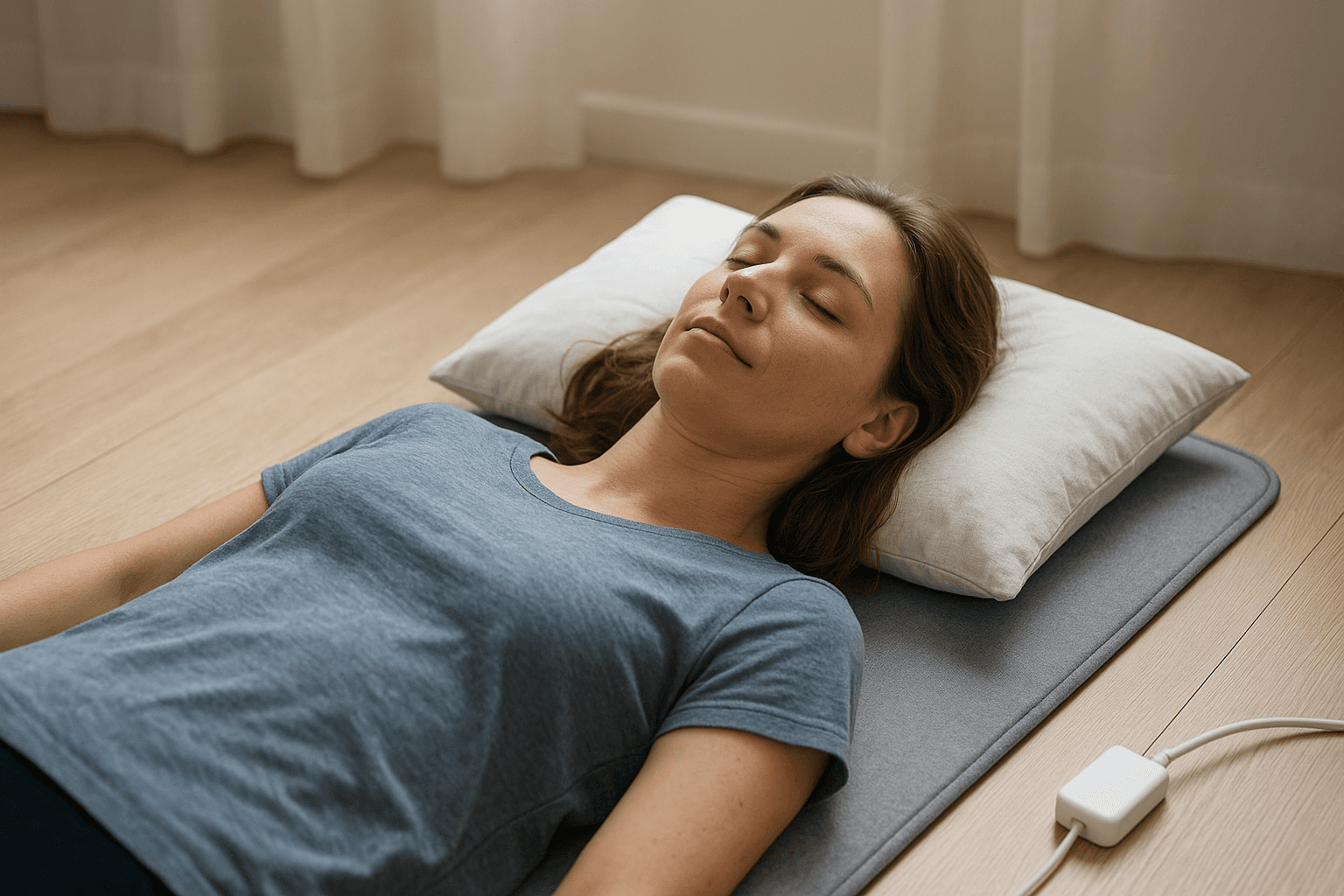
Grounding, also called earthing, is the idea that direct contact with the earth's surface may influence how the body feels and functions. The practice has moved from barefoot walks on grass to plug-in mats, sheets, and bands sold online and in wellness stores.
Interest is driven largely by two goals: sleeping better and recovering after exercise or a long day. Many people say they feel calmer or more rested, but the research is small and early, and it does not support medical promises.
This guide covers what grounding is, what people commonly report, what the evidence does and does not show, and what to look for if a grounding mat is on the shopping list.
What Grounding Actually Means
The core idea is that the earth carries a slight negative electrical charge, and that touching it allows electrons to move between the ground and the body. Supporters suggest this may affect inflammation, stress responses, or sleep patterns. These ideas are still hypotheses rather than established medical facts.
There are two main ways people try it:
- Outdoor contact: walking barefoot or sitting or lying on grass, sand, or soil.
- Indoor products: mats, bed sheets, or bands connected by a cord to the ground port of a properly wired wall outlet, or to a rod placed in the soil outside.
Indoor products are designed to mimic outdoor contact. They do not generate or deliver power. They are meant only to connect the skin to the same electrical reference point as the earth.
What People Report
Users often describe subtle changes rather than dramatic ones. Commonly mentioned experiences include:
- Falling asleep more easily or waking less often during the night
- Feeling less tense at the end of the day
- Less muscle soreness or stiffness after workouts
- A general sense of relaxation while using a mat at a desk or on the couch
These accounts are personal and hard to measure. Time outdoors, a calmer evening routine, and the simple act of setting aside quiet time can all improve how people feel. Expectations also matter, since people who anticipate a benefit may be more likely to notice one.
What the Research Shows
Studies on grounding exist, but most are small, short, and sometimes funded or conducted by people connected to the industry. Some report changes in sleep quality, stress markers, or muscle soreness. Others have design limits, such as few participants or no reliable way to keep people from knowing whether they were grounded.
A frequently cited 2012 review in the Journal of Environmental and Public Health discussed possible physiological effects, but it also called for more rigorous work. Larger, independent, well-controlled trials would be needed to say whether grounding helps sleep or recovery beyond placebo effects.
In practical terms:
- Grounding is not a proven treatment for insomnia, pain, or any medical condition.
- It should not replace care from a doctor, especially for persistent sleep problems.
- Anyone with an implanted medical device or a health concern should ask a clinician before using electrical accessories.
What to Look for in a Grounding Mat
If curiosity wins out, a few features separate better-made products from questionable ones.
- Clear grounding method: The product should explain how it connects, usually through a cord that plugs into the ground port of an outlet. Avoid products that ask you to use the hot or neutral slots of an outlet.
- Built-in resistor: Many mats include a small resistor in the cord as a safety feature. Look for this to be stated plainly.
- Outlet tester: A simple plug-in tester confirms the outlet is actually grounded. Older homes may not have proper grounding.
- Conductive materials: Mats often use carbon, silver threads, or conductive polymers. Check care instructions, since washing can wear down some materials.
- Right size and fit: A desk mat, bed sheet, and floor mat serve different uses. Choose based on where you would realistically use it.
- Return policy and warranty: Because results vary, a fair trial period matters.
- Measured marketing: Be wary of claims to cure disease, replace medication, or guarantee results. Reputable sellers describe use and features without making medical promises.
Prices vary widely by size and brand, so comparing several options and reading independent reviews is worthwhile.
Simple Habits That Also Support Sleep and Recovery
Whether or not grounding appeals, habits with stronger support can do much of the work. The CDC and other public health groups point to consistent sleep and wake times, a dark and cool bedroom, limiting caffeine later in the day, and reducing screen use before bed.
For recovery, adequate sleep, hydration, balanced meals, and gradual increases in training are standard guidance. Spending time outside, including barefoot time on grass if conditions are safe, is a low-cost way to test whether the experience feels beneficial.
Grounding may be a pleasant addition to a routine for some people, but it works best as one small piece rather than a fix. Anyone with ongoing trouble sleeping, loud snoring, or daytime exhaustion should talk with a healthcare professional.